Scientific Context
Molecular structure, dynamics, and interactions shape many biological, chemical, and materials processes across atomic scales and multiple timescales.
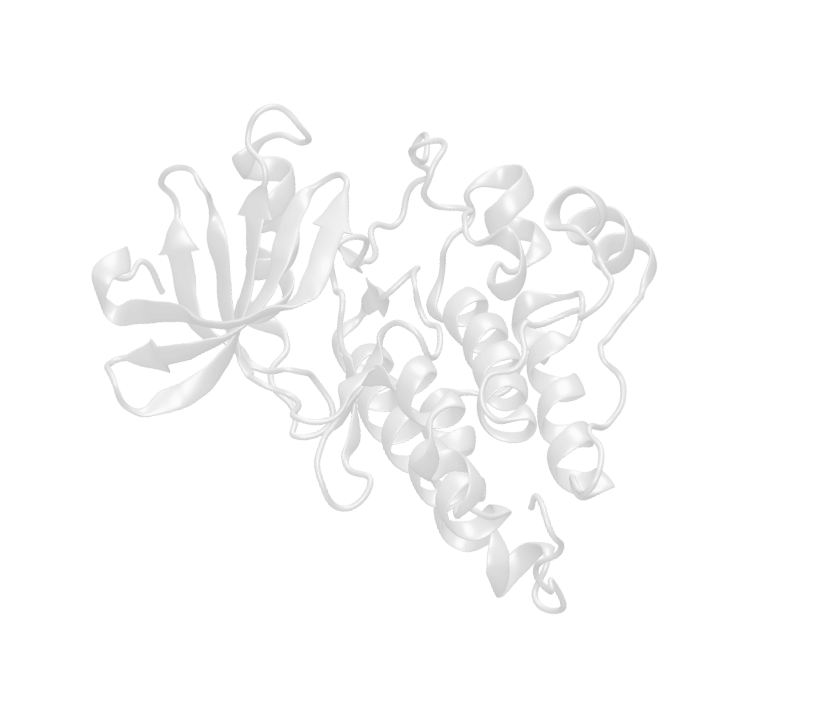
What is SPONGE?
Developed by the Yi Qin Gao group at Peking University, SPONGE accelerates molecular dynamics across many hardware platforms, including many-core CPUs, GPUs, and NPUs, while integrating enhanced sampling methods and AI-driven algorithms.
Why molecular simulation?
Molecular structure, dynamics, and interactions shape many biological, chemical, and materials processes across atomic scales and multiple timescales.
Molecular simulation acts as a computational microscope, connecting microscopic mechanisms with thermodynamic properties and observable phenomena.
As molecular systems grow larger, simulation timescales become longer, and sampling problems become more complex, simulation software must adapt to heterogeneous hardware, enhanced sampling methods, and AI-driven computational paradigms.
Core Capability
SPONGE is designed to accelerate molecular dynamics simulations across CPUs, GPUs, NPUs, and Chinese hardware platforms, combining portability on Windows, Linux, and macOS with performance in heterogeneous computing environments.
Core Capability
For conformational changes, rare events, and free energy landscapes, SPONGE integrates enhanced sampling methods to help researchers explore complex molecular systems more effectively.
Core Capability
SPONGE follows the development of AI-enhanced molecular simulation, exploring how machine learning can support modeling, sampling, potentials, analysis, and simulation decision-making. It connects machine learning, molecular modeling, and traditional molecular dynamics simulation, supports AI-driven ideas for sampling, analysis, and model-assisted simulation, and keeps clear software interfaces for future algorithm development and cross-tool collaboration.
Frontier Direction
Agentic MD points toward autonomous molecular simulation workflows where AI agents help plan, execute, inspect, and iterate simulation tasks. It is an emerging direction for moving from manual scripts to explainable intelligent collaboration, exploring autonomous molecular simulation together with workflow automation, letting agents assist system preparation, parameter checks, task orchestration, and result analysis, and emphasizing traceable, reviewable, and iterative simulation decisions for complex research workflows.
Typical Applications
For proteins, nucleic acids, membranes, ligand recognition, and other biomolecular systems, SPONGE supports studies of conformational dynamics, molecular interactions, binding free energy, and mechanistic interpretation, helping researchers understand complex biological processes at atomic resolution.
Typical Applications
For polymers, electrolytes, interfaces, crystals, soft matter, and related materials systems, SPONGE can support studies of microscopic structure, diffusion and transport, interfacial interactions, and thermodynamic properties, providing computational support for materials design and performance understanding.
Ecosystem
SPONGE aims to build an open, reusable, and extensible molecular simulation software ecosystem for research and education across universities and institutes, as well as R&D and engineering applications in industry. It supports teaching and research in computational chemistry, molecular simulation, molecular modeling, and high-performance computing, while also serving enterprise scenarios in drug discovery, materials, energy, and intelligent computing. SPONGE has been used in teaching contexts such as the Peking University undergraduate course Introduction to Computational Chemistry, and is exploring connections among scientific software, intelligent computing, and industrial applications with organizations including Beijing Sidereus Intelligent Computing Technology Co., Ltd.